





For generations, chemistry students have memorized the same golden rule that atoms bond based on electronegativity, a measure of how strongly they attract electrons. This principle, first proposed by Nobel laureate Linus Pauling in 1932, shaped everything from high school textbooks to advanced molecular design.
But now, scientists have found that the universe doesn’t always play by those rules. A new international study has overturned one of the most fundamental laws of chemistry, revealing that under certain extreme conditions, atoms can completely reverse their roles making the “weaker” atom suddenly behave like the stronger one.
Breaking the Rulebook of Chemistry
The research, led by scientists from the University of Cambridge and EPFL Switzerland, used state-of-the-art quantum simulations to observe how atoms behave under ultra-high pressures the kind found deep within giant planets like Jupiter or Neptune

To their astonishment, the team discovered that traditional electronegativity values the same ones used to predict how elements bond no longer hold true beyond a certain pressure threshold. Instead, atoms begin to form “reversed bonds”, where the less electronegative atom attracts electrons from the more electronegative one.
In simple terms, the usual chemical “push and pull” of electrons gets flipped upside down.
“It’s as if we’ve been reading nature’s instruction manual upside down for extreme environments,” said Dr. Natalia Ochoa, the project’s lead researcher. “Once pressure distorts the atoms’ electron clouds, all the familiar bonding logic starts to break.”
A Real-Life Example: Salt That Isn’t Salt
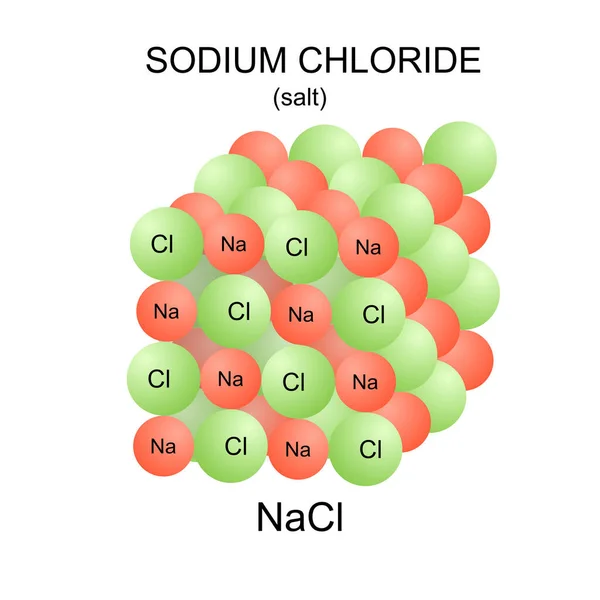
One of the most striking cases involved sodium chloride (NaCl) ordinary table salt.
Under pressures exceeding a million atmospheres, the bond between sodium and chlorine did something scientists once thought impossible: sodium began attracting electrons from chlorine instead of donating them.
That’s like watching magnets suddenly change poles mid-experiment.
This means that deep within planets or experimental reactors, matter might exist in completely new chemical states, where familiar materials behave in alien ways.
Implications for Future Science and Technology
This discovery isn’t just about rewriting textbooks it could reshape how scientists design materials for the most extreme environments known to science.
Understanding reversed bonding could:
- Help design new superconductors that function at higher temperatures.
- Unlock stronger, lighter materials for spacecraft and nuclear fusion systems.
- Explain the mysterious compounds found in planetary interiors, such as metallic hydrogen and exotic ices.
The findings suggest that chemistry as we know it only describes a small slice of reality the one that exists under Earth-like conditions. Beyond that, there’s an entire hidden chemistry still waiting to be explored.
“We’ve learned that the periodic table still has tricks up its sleeve,” added Dr. Ochoa. “Even our most trusted rules bend when the universe turns up the pressure.”
The Next Frontier
The research opens a new subfield often called “extreme-state chemistry.” By combining artificial intelligence, quantum modeling, and high-pressure lab experiments, scientists hope to map out how all 118 elements behave under intense compression.
Such discoveries could guide humanity’s next technological revolution from planetary exploration to fusion energy, and even materials that mimic conditions at the heart of stars.
For the first time in a century, chemistry feels brand new again.