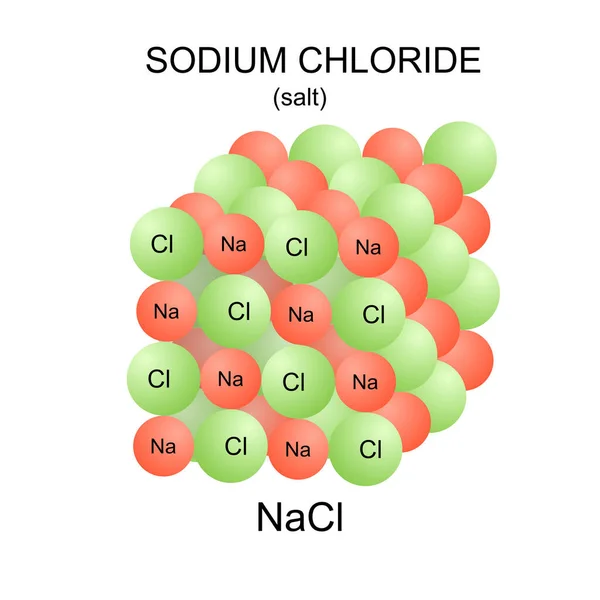





A major scientific breakthrough has brought quantum computing and chemistry closer than ever before. Scientists at Google’s Quantum AI division have achieved a massive leap in how molecules are analyzed by using their new “Quantum Echoes” algorithm on the Willow quantum processor, enabling molecular simulations more than 13,000 times faster than traditional supercomputers.

Ragsxl
This marks one of the first real demonstrations of quantum advantage in practical chemistry proving that quantum computers are no longer just theoretical tools, but real instruments capable of solving molecular problems that classical computers can’t handle efficiently.
For decades, chemists have relied on computer simulations to understand how atoms interact, how bonds form, and how energy moves within a molecule. But these calculations become nearly impossible for large or complex molecules, because the amount of data grows exponentially. Even the world’s fastest supercomputers struggle to predict accurate molecular behaviors beyond a few atoms.
That’s where quantum computing comes in. Instead of working with bits which can only represent 0 or 1 quantum computers use qubits, which can exist in multiple states at once. This allows them to model atomic interactions directly, mimicking real quantum behavior instead of approximating it.
Google’s new “Quantum Echoes” algorithm does exactly that. Using the Willow chip, it simulated molecular structures and chemical energy levels with unprecedented accuracy and speed. The team claims that their system completed calculations that would take a classical supercomputer months in just a few minutes.
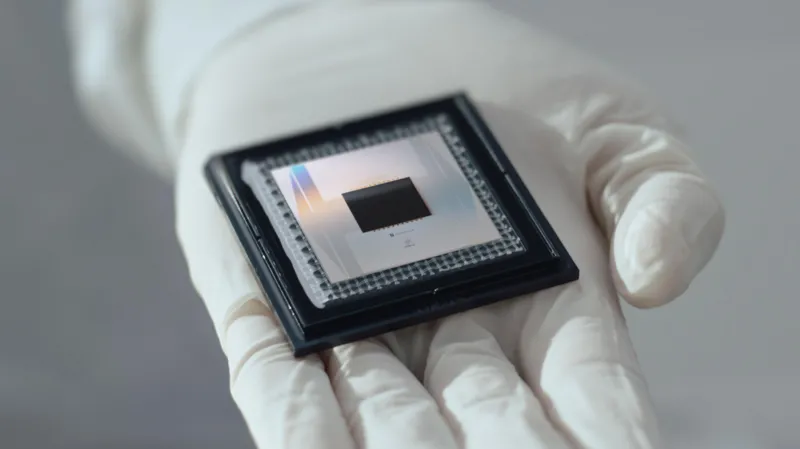
“We’ve reached a point where quantum computation isn’t just faster it’s providing results that classical systems can’t reach,” said Dr. Julian Kelly, Google Quantum AI researcher. “For chemistry, this changes everything.”
The implications are enormous. Accurate molecular modeling could revolutionize how scientists design new materials, pharmaceuticals, and energy systems. For example, discovering new catalysts, more efficient solar cells, or safer battery compounds could happen in a fraction of the time it takes today.
The technology also opens new doors for drug discovery. Instead of trial-and-error lab experiments, chemists could simulate how a molecule interacts with human proteins before ever mixing a single substance cutting costs, waste, and development time.
Still, experts say this is just the beginning. Quantum computers remain complex, expensive, and delicate machines, operating near absolute zero temperatures. But as the technology matures, the power it brings to chemistry and material science will likely transform entire industries.
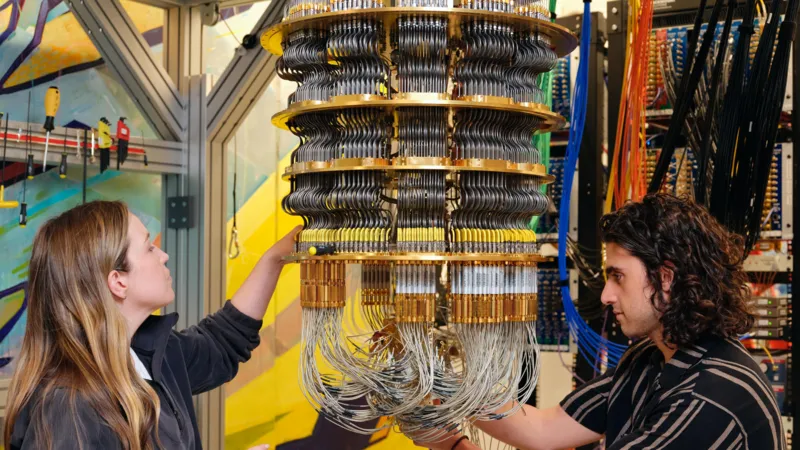
This milestone confirms that quantum chemistry once a far-off dream is becoming a practical reality. With every new algorithm and chip, scientists inch closer to a world where molecular mysteries can be solved not by human intuition, but by quantum logic.
As one researcher put it, “It’s like switching from candlelight to laser beams the clarity is on a different level.”
Google Research Blog – “Quantum Echoes: Verifiable Quantum Advantage in Molecular Structure Simulation”, published October 2025.