




Cameroon’s long-serving President Paul Biya, aged 92, has officially secured his eighth consecutive term in office, extending his already record-breaking rule over the Central African nation. The Constitutional Council announced that Biya won 53.7% of the vote in the October 12, 2025, election, defeating his closest rival, Issa Tchiroma Bakary, who obtained 35.2%.
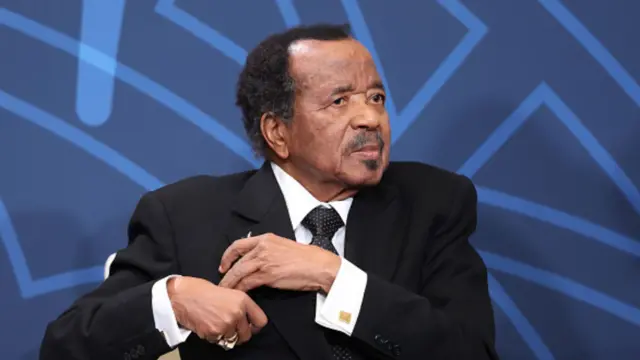
The announcement cements Biya’s position as the world’s oldest sitting head of state, continuing a presidency that began in 1982—a period spanning more than four decades. His new seven-year term means he could remain in power until he turns 99, a prospect that has drawn both admiration and outrage from different corners of Cameroonian society.
A Nation Divided

While government supporters celebrated the victory, hailing Biya as a symbol of stability and continuity, the opposition and many citizens have voiced deep frustration. Critics argue that his lengthy rule has stifled democracy, entrenched corruption, and weakened public institutions. In contrast, his loyalists claim that his experience and calm leadership have helped Cameroon remain steady amid regional insecurity, separatist tensions, and economic challenges.
Protests erupted shortly after the election results were announced in major cities such as Yaoundé, Douala, and Garoua. Security forces reportedly clashed with demonstrators demanding transparency and electoral reforms. Human rights organizations say that at least four people were killed and several others injured as police dispersed crowds using tear gas and rubber bullets.
Allegations of Irregularities
Opposition parties, led by Issa Tchiroma Bakary, have rejected the outcome, alleging voter intimidation, ballot tampering, and restricted access to polling stations in opposition strongholds. They argue that the electoral process was heavily skewed in favor of the ruling Cameroon People’s Democratic Movement (CPDM).
Despite international observers noting some procedural issues, the government insists that the election was free and fair. The Minister of Communication praised the process, calling it a “victory for democracy and national unity.”
The Legacy of Paul Biya
Biya’s leadership has been characterized by a combination of political resilience and authoritarian control. Since taking office in the early 1980s following the resignation of his predecessor Ahmadou Ahidjo, Biya has survived military coups, internal party revolts, and mounting public pressure.
Under his watch, Cameroon has experienced both development and decline. The capital, Yaoundé, and the commercial hub, Douala, have seen infrastructural growth, while rural areas and the English-speaking regions continue to suffer from neglect and unrest. The Anglophone crisis, which began in 2016, remains unresolved, with many calling for dialogue and decentralization to restore peace.
Internationally, Biya maintains strong ties with France and China, both key partners in trade and investment. However, Western governments and human rights groups have consistently criticized his administration for media suppression, unlawful detentions, and excessive use of force against dissenters.
Cameroon’s Uncertain Future
As Biya embarks on his eighth term, Cameroonians face an uncertain political future. Many young citizens, who make up a majority of the population, have never known another leader. This generational gap has fueled disillusionment and migration among the youth seeking opportunities abroad.
Observers say Biya’s biggest challenge will be to restore public trust, improve economic conditions, and ease political tensions. Calls are growing for a peaceful transition of power and institutional reforms to ensure the country’s long-term stability beyond his rule.
For now, Paul Biya remains firmly in control an aging leader presiding over a restless nation, where the struggle between continuity and change defines every election cycle.
Tags: Paul Biya, Cameroon election 2025, Issa Tchiroma Bakary, Africa politics, longest-serving presidents, Cameroon protests, democratic reforms, human rights Cameroon, Central Africa news, political transition