





A Historic First: A Former French President Imprisoned
On October 21, 2025, former French President Nicolas Sarkozy entered Paris’s notorious La Santé prison to begin serving a five‑year sentence.At age 70, he is the first former head of state in modern France—and among the first in the European Union to serve actual prison time for offenses tied to his time in public office.
His conviction stems from an elaborate case involving alleged illegal campaign financing from the Libyan regime of Muammar Gaddafi for Sarkozy’s successful 2007 presidential bid.
Despite having filed appeals and vocally protestations of innocence, the court ordered immediate enforcement of his sentence meaning he must begin serving time even before higher‑court review.
The Libyan Financing Allegations: What the Court Found
The Core Accusation: Criminal Conspiracy
Sarkozy was convicted of criminal conspiracy (association de malfaiteurs) in connection with efforts by his inner circle to solicit funds from Libya to support his 2007 campaign.The court determined that between 2005 and 2007, Sarkozy “allowed his close collaborators … to approach Libyan authorities ‘in order to obtain or attempt to obtain financial support’.”
Importantly, the judges did not conclusively find that Sarkozy himself directly received or used the funds. Instead, they focused on the illicit scheme and coordination with associates, deeming the wrongdoing sufficient for criminal liability under French law.
Charges Acquitted and Penalties Imposed
Sarkozy was acquitted on three additional charges:
- Passive corruption
- Illegal campaign financing
- Concealment of the embezzlement of Libyan public funds
The court nonetheless imposed:
- A five‑year prison sentence
- A €100,000 fine
- A five‑year ban from holding public office
Notably, the sentence is “provisionally enforceable” meaning Sarkozy cannot avoid incarceration simply by appealing.The court also delayed fixation of the precise date of imprisonment, sparing the spectacle of leading him out of the courtroom in handcuffs.
Co‑Defendants and Wider Fallout
Several of Sarkozy’s closest aides and associates were also convicted in connection with the scheme:
- Claude Guéant, his former chief of staff, received a six‑year sentence (though health reasons may delay incarceration) and other financial penalties.
- Brice Hortefeux, a former minister, was also found guilty of criminal association and sentenced to two years.
- Other individuals tied to the case (bankers, intermediaries, Libyan officials) also faced convictions or financial sanctions. L
Certain high‑profile co‑defendants, however, were acquitted or had charges dropped. Part of the defense argument was that the evidence especially regarding whether funds reached the campaign remained circumstantial or opaque.
The investigative trail included:
- A Libyan intelligence memo purporting a €50 million agreement (which the defense denounced as forgery)
- Testimony from Libyan insiders
- Financial transfers through offshore entities
- Trips by aides to Libya
- The notebook and testimony of the late Libyan oil minister Shukri Ghanem (found dead in 2012)
The prosecution had asked for a harsher sentence seven years in prison and much larger fines.
The Start of the Sentence: October 21, 2025
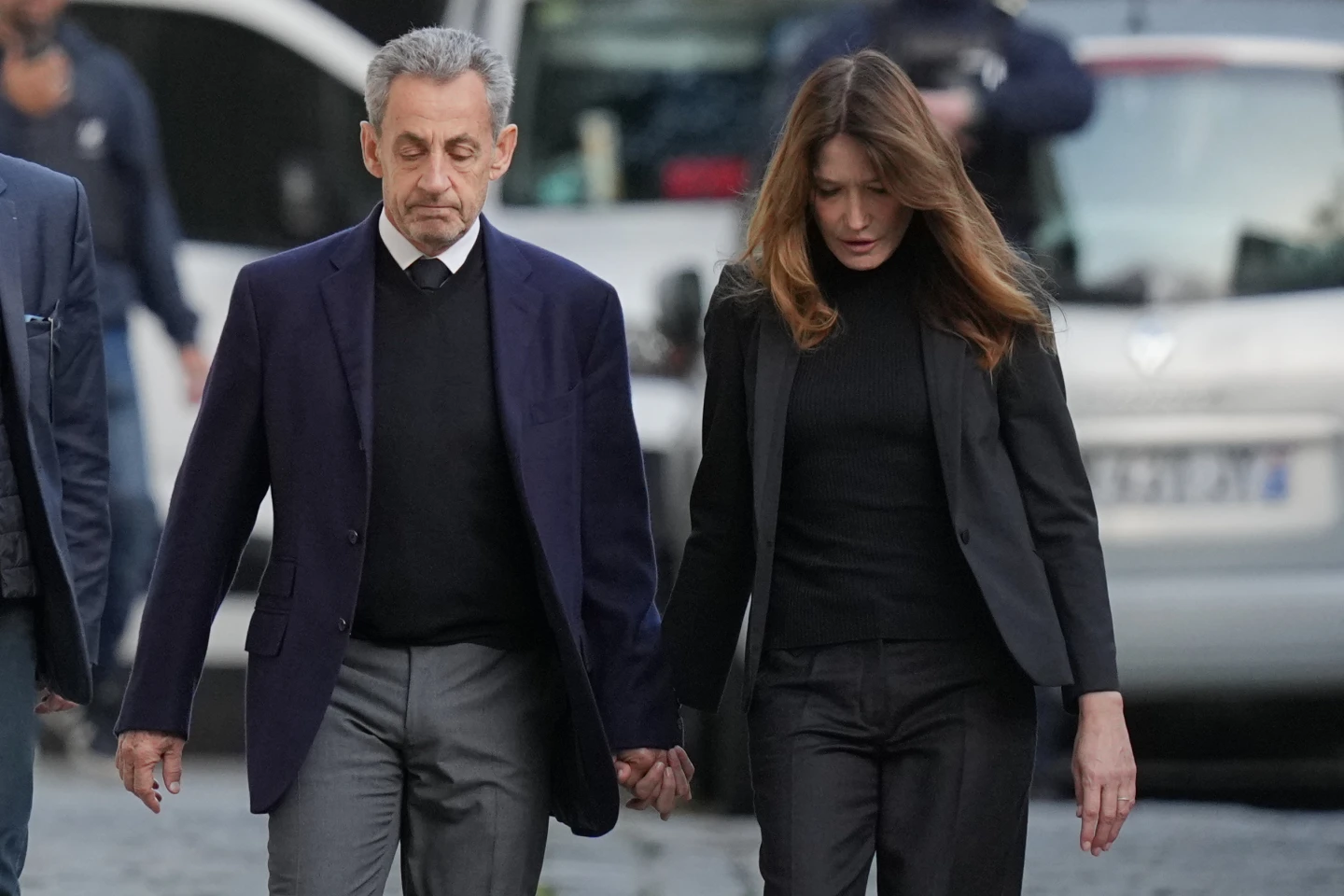
On the morning of October 21, Sarkozy left his home in Paris under police escort and arrived at La Santé prison to begin serving his term. He is being held in a special section or isolation to manage security risks posed by his status. Supporters and family members including his wife, Carla Bruni were present in the area early that morning, some singing the national anthem or holding banners of solidarity
Sarkozy has publicly declared he will face his term with his “head held high” and maintain his innocence, calling his conviction a “judicial scandal.” Before entering, he is permitted limited personal items, such as books and family photos, as part of prison allowances.
Because of his age and health, there is legal pathway for conditional release or early parole depending on customary French rules but nothing is guaranteed