



Kenya woke to the news that Raila Amolo Odinga opposition titan, former Prime Minister, and a defining figure of post-independence politics died while in India, aged 80. Multiple international and Kenyan outlets report that he suffered a cardiac arrest while receiving treatment in Kerala and was pronounced dead in hospital.
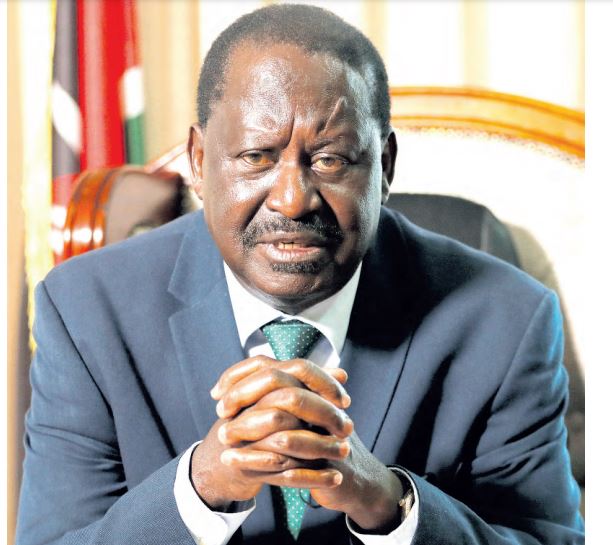
Raila was more than a politician. For many Kenyans he was “Baba”: a symbol of long struggle, grievance and hope; for others he was a polarising figure whose campaigns exposed deep national divisions. His death is therefore both a political earthquake and a social moment of collective grief. Below I map what his passing likely means in the short and medium term for Kenya’s political landscape and for the country’s emotional life.
1) Immediate political reality: authority, calm and control
Within hours of the reports, Kenya’s presidency convened emergency meetings, and political leaders posted messages of condolence and unease. The government moved quickly to manage the narrative and public order a predictable step given the potential for unrest after the loss of a leader with such a mobilising base.
Two competing dynamics will play out immediately. First, the state must manage security and national ceremonies funerals, repatriation, and public vigils without appearing partisan. Second, Raila’s political movement needs a rapid internal response: a single point of leadership to coordinate mourning, public messaging and next steps for the party and allied coalitions.
2) Who runs ODM now? The succession fight
Raila had long prepared for succession inside the Orange Democratic Movement, but no undisputed successor sat in his place. Over recent years several senior figures including Anyang’ Nyong’o, governors like Alfred Mutua, Joho and Oparanya, and party secretary-general Edwin Sifuna were floated as contenders or caretakers. Media coverage before his death documented a “big five” and persistent jockeying for the party’s top job.
Practically, we should expect a short-term caretaker arrangement: either an acting chair or a management committee that speaks for ODM while the party organizes a formal succession process. If earlier internal decisions hold, figures like Anyang’ Nyong’o who has been entrusted with party affairs in the past — are likely to be central to a transition. But expect fierce competition: Raila’s network stretched wide across regions, and leadership of ODM is an attractive springboard for national prominence.
3) The electoral arithmetic: what this means for Ruto and future elections
Raila’s death alters the immediate political arithmetic.
- For President William Ruto: Raila’s passing removes the most visible, charismatic opposition figure and may ease certain tensions, but it does not automatically translate into a smoother governing path. Ruto now faces the challenge of managing a national grieving process while staying politically steady; mishandling state responses or perceived triumphalism could backfire. Reports already indicate Ruto convened emergency briefings in response to the news.
- For opposition politics: Raila was the central node connecting multiple opposition actors and coalitions. Without him, alliances (formal and informal) risk fragmentation. Some leaders may attempt to consolidate his supporters; others may try to carve out regional power bases. The immediate question: will ODM hold together as a unified national force, or fragment into competing fiefs? Early signs point to a scramble rather than a neat, single heir.
- For the 2027 and beyond: Raila’s personal appeal among certain voter blocs especially in Nyanza and among parts of the urban youth cannot be transplanted wholesale to any one successor. That means the opposition’s ability to project a single challenger to Ruto depends on how fast and how effectively ODM and allied parties reorganize.
4) Regional and international ripples
Raila was also a recognised continental player; international leaders and institutions who engaged him now lose a seasoned interlocutor. Early condolences poured in from regional leaders and global bodies, underscoring his diplomatic weight. Expect a diplomatic choreography: state condolences, visits by regional heads, and statements from bodies such as the African Union.
Trade and security cooperation are unlikely to shift immediately, but Kenya’s reputation as a stable regional anchor will be tested by how calmly the next weeks unfold.
5) Emotional landscape: national mourning, memory and meaning
Politically, Raila’s death will be managed by elites and institutions. Emotionally, it will be managed by communities, families and the many ordinary Kenyans who feel personally connected to him.
- Grief and rituals: Mass vigils, church and mosque services, local processions and gatherings at party headquarters are all likely. Sites such as Orange House and Raila’s homestead will become focal points for public grieving. Reports already show crowds and cryptic messages from politicians and citizens.
- Narrative contests: Expect competing narratives about his legacy. Supporters will foreground his democratic struggle, the 2010 constitution, and his role as a voice for the marginalized. Critics will remind the public of contested elections, allegations of populism, and policy gaps. These competing accounts will shape how younger Kenyans many who remember Raila only as a perennial candidate interpret his legacy.
- Healing and division: Raila’s death could either be a moment of national unity or of renewed division, depending on how leaders behave. Historically, funerals of major leaders can create brief truces; they can also harden succession disputes into bitter rivalries. The tone set by the State, ODM’s new leadership and other party chiefs will matter more than any single speech.
6) What to watch for in the next 48–72 hours
- Official statements: Full confirmation and a family/ODM press conference that lays out funeral, repatriation and mourning plans. (This will shape public order and protocol.)
- ODM caretaker announcements: Who speaks for the party, who chairs the mourning committee, and whether a roadmap for succession is declared.
- State protocol: Will the government declare a national mourning period? How will President Ruto and State House manage public ceremonies?
- Security posture: Deployment around major gatherings, especially in Nairobi, Kisumu and other Raila strongholds.
- Emerging contenders: Which politicians start consolidating support inside ODM and across the wider opposition?
7) Longer-term stakes: party, identity politics and Kenya’s democratic arc
Raila’s political life was intertwined with Kenya’s modern democratic story from the push against one-party rule to the 2010 constitution and repeated electoral battles. Without his unique personal brand, three deeper long-term questions emerge:
- Can a single party or coalition inherit his national reach? Raila’s charisma and long-standing grievance politics were personal but fed by structural issues: regional marginalisation, youth unemployment, and contested institutions. Unless those structural grievances are addressed politically, Raila’s absence will open space for other leaders to mobilise similar sentiment.
- Will identity politics intensify or mellow? Raila’s campaigns often mobilised ethnic identity and region. A fragmented opposition may insert local leaders into national roles, which could reconfigure ethnic balances in politics sometimes dangerously.
- Will institutional politics strengthen? A constructive outcome would be a shift from personality-driven opposition to policy-oriented parties and stronger institutions. That’s a heavy lift but the moment of transition offers an opening for renewed political reform efforts.
Bottom line
Raila Odinga’s death removes a towering, polarising, and unignorable figure from Kenyan politics. In the short term, expect a period of careful choreography funeral protocols, ODM succession mechanics, and security management. In the medium term, Kenya faces a genuinely open political contest over who captures Raila’s political inheritance and how that reshapes opposition politics, ethnicity-based mobilisation, and the balance with the Ruto administration.
Emotionally, Kenyans will grieve a leader whose life story detention, resistance, repeated candidacy, handshake, and persistent relevance made him a living reference point for a generation. How the country honours him, and how political leaders behave in the next weeks, will determine whether his passing is a moment of unity or a trigger for new political turbulence.