


A Philosophical Reflection on Meru’s Creative Evolution
Every artistic ecosystem develops invisible structures of influence.
Some are formal: galleries, stages, studios…Others are informal — networks, word-of-mouth, reputations.
In Meru’s art community, a conversation has quietly emerged around “Gatekeepers”: established figures and institutions whose decisions determine who gets visible platforms and professional opportunities.
At first glance, this might seem like a generational clash — young creatives feeling stymied by those who came before them.
But beneath the surface lies a more universal dynamic: the tension between tradition and transformation.
Historically, every creative field has experienced this tension. When resources are scarce and platforms limited, control tends to concentrate. Those who once struggled for access naturally seek to protect the pathways they fought to build.
This is not inherently malicious — it is an instinct rooted in legacy preservation.
Yet when the structure that once sustained the industry begins to narrow access, alternative systems begin to emerge.

A recent example in Meru illustrates this evolution.
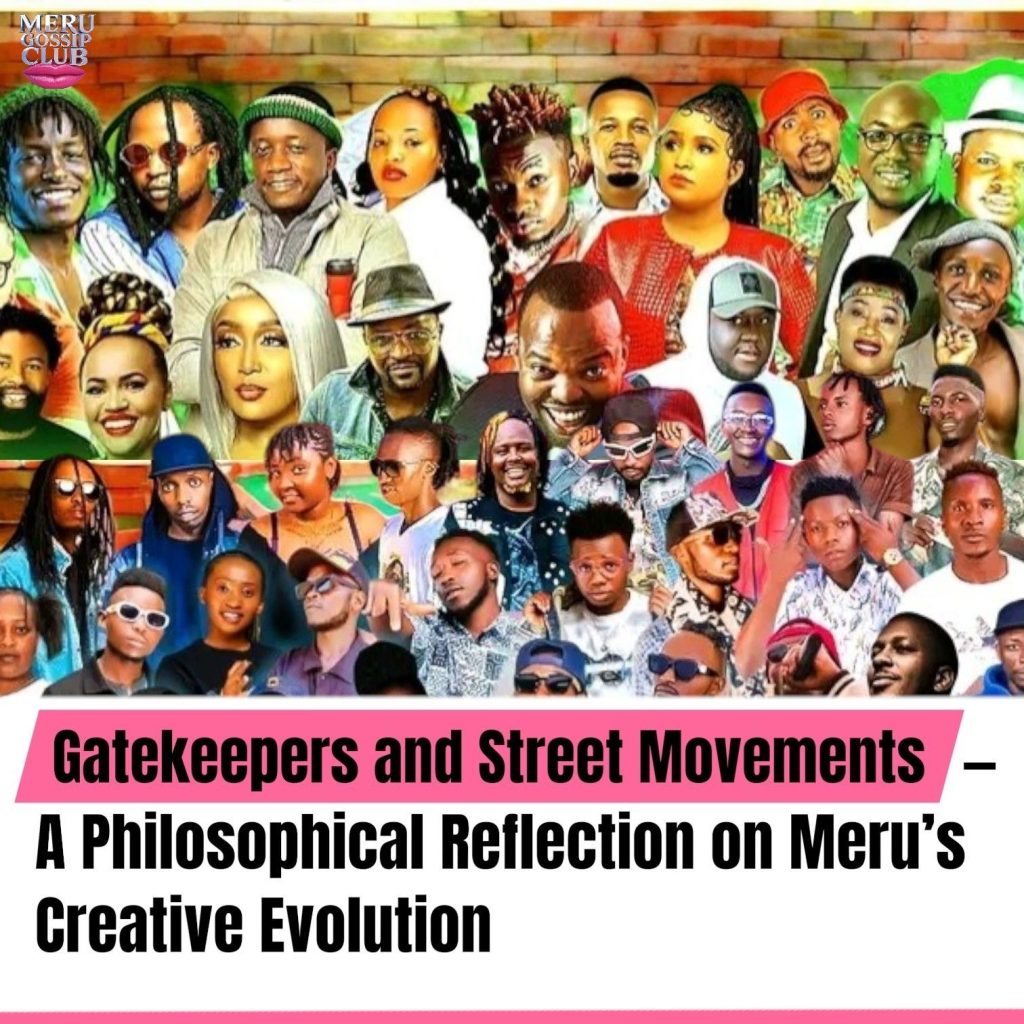
A collective of emerging artists under the banner Street Invasion has been organizing open, public art events — first in Maua Town, then in Laare Market, with another one now scheduled in Nkubu Market. Rather than waiting for formal stages, they situate art within public spaces, creating accessible platforms for talent that may otherwise go unseen.
According to Flamieh Flames, one of the founders, the goal is to extend opportunities to underrepresented voices… those who feel excluded from established structures.
Whether one interprets this as disruption or expansion depends on perspective.
From a sociological standpoint, such phenomena are not unusual. When conventional access points consolidate, informal platforms proliferate. When hierarchy tightens, decentralization accelerates.
Our aim is to give platform to all artists equally, whether upcoming or established
Flamieh Flames, Rapper
Street-level artistic movements do not necessarily signify chaos.
They often signal transition.
The question is not who controls access.
It is whether the industry is maturing.
Gatekeeping, when tempered by openness, can uphold quality and continuity.
Grassroots movements, when driven by purpose, can widen opportunity and imagination.
A thriving creative scene is not defined by rigid structures or total spontaneity — but by its ability to hold both legacy and innovation in balance.
If Meru’s art community currently experiences friction, perhaps it is not a sign of division — but of growth.
And growth, by its very nature, is rarely quiet.