



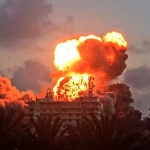

The United States has declared that Iran’s missile strength has been severely damaged after weeks of joint military strikes carried out with Israel, but fresh missile alerts across the Gulf region suggest Tehran still has enough power left to keep its enemies watching closely.
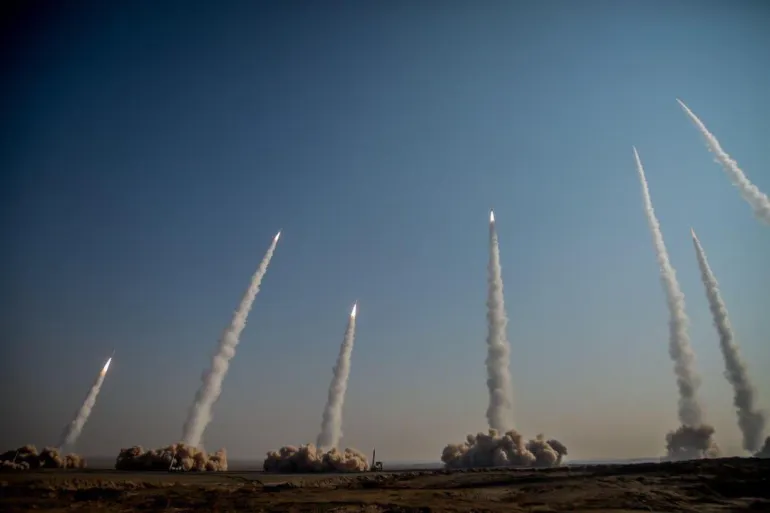
According to Al Jazeera, Washington says hundreds of Iranian launch systems have been destroyed under what the White House calls Operation Epic Fury, yet missile interceptions were again reported over Qatar, while security warnings were also issued in Saudi Arabia, United Arab Emirates and Bahrain.
A War of Fewer Missiles, But More Strategy
Military analysts say Iran is no longer firing large missile waves like it did at the beginning of the conflict. In the early hours of the war, Iran launched over 160 missiles and hundreds of drones toward regional targets. Now, the attacks have dropped sharply, often involving just a few missiles or drones at a time.
But experts argue this does not mean Iran is defeated.
Instead, Tehran appears to have shifted into a slower strategy designed to keep pressure on air defence systems and maintain psychological fear across the region.
One missile landing in a civilian area, one drone reaching critical infrastructure, or one successful strike near an airport can still create political shock far beyond its military size.
Why the US Has Not Fully Stopped Iran
Although American and Israeli forces have reportedly destroyed many launch platforms, Iran still has one major advantage: geography.
Iran is a vast country, and many missile systems are hidden in underground facilities, mobile launch units, and locations not easily identified from air surveillance.
Security experts quoted by Al Jazeera explain that mobile launchers allow Iran to relocate quickly after firing, making them difficult to destroy before the next attack.
This means even with air superiority, complete elimination of missile capability remains extremely difficult.
Drones Are Becoming Iran’s Quiet Weapon
Another major reason Iran remains dangerous is its continued use of cheap attack drones such as the Shahed 136.
These drones are inexpensive, fast to produce, and can be launched in groups to confuse radar systems.
Unlike large ballistic missiles, drones do not require complex launch infrastructure, which makes them harder to track before takeoff.
Recent incidents near major airports and industrial areas in the Gulf show that even limited drone attacks continue to disrupt civilian and commercial operations.
Oil Prices and Global Trade Feeling the Pressure
The conflict is now extending beyond military targets into economic consequences.
The fear of missile or drone attacks in the Strait of Hormuz has left hundreds of ships operating cautiously, with many delaying movement.
That narrow sea route carries about one-fifth of global oil supplies.
As tensions continue, oil prices have already moved above $100 per barrel, while energy exports from parts of the Gulf have slowed sharply.
For many countries, the bigger fear is no longer just military escalation — it is economic shock.
Iran’s Message: Survival, Not Victory
Experts believe Iran’s goal is no longer massive retaliation but endurance.
By launching smaller but consistent attacks, Tehran may be trying to prove that it can survive prolonged pressure and still threaten regional stability.
That alone can influence diplomatic negotiations, energy markets, and military calculations worldwide.
What Happens Next
The coming days may determine whether the conflict moves toward wider escalation or quiet negotiation.
For now, even reduced missile fire is enough to keep the Middle East on edge.